
Fremont County Arrest Warrants Explained
An arrest warrant gives a peace officer judicial authority to take a named person into custody on stated terms. Colorado law spells out the mechanics. Colorado Revised Statutes section 16-3-108 covers the sworn arrest-warrant affidavit and probable cause. Section 16-3-102 authorizes an arrest under a warrant and in other lawful probable-cause situations. Keep four events apart. A Fremont County arrest warrant was issued. A person was arrested. Charges were filed. The case then ended in a conviction, dismissal, or some other result. One of these does not prove the next, and a Sheriff jail-intake post can say an arrest involved a warrant without naming the issuing court or showing a later disposition. The issuing court is the legal anchor for any Fremont County warrant question. Fremont Combined Court serves as the public clerk route for County and District Court cases. A municipal court may hold a city case, and a federal matter belongs to the U.S. District Court system rather than the county clerk.
Fremont County Arrest Warrant Probable Cause
Probable cause is the hinge of every arrest warrant. An officer swears out facts in an affidavit, and a judge or magistrate decides whether those facts give a reasonable basis to believe an offense occurred and that the named person is tied to it. That standard falls well short of trial proof. In Fremont County, the 11th Judicial District's Chief Judge Directive 12-01 sets out an email process for officers seeking review of arrest and search warrants. It requires separate editable affidavit and proposed-warrant files, a correct jurat date, an officer signature, a judicial signature, and later filing of the return with the clerk. Felony requests normally get prosecutor review first, unless urgency makes that impossible. This workflow runs officer-to-court. The listed on-call email is not a public Fremont County arrest warrant search, and no judge will use it to discuss personal status. Direct public questions to the clerk, the Sheriff, or your own counsel.
Inside a Fremont County Arrest Warrant
A public copy of a Fremont County arrest warrant may show the core judicial order plus related case fields. Not everything is available remotely. Affidavits can be sealed, and victim, witness, address, financial, juvenile, or investigative details may be restricted.
| Case or warrant number | The identifying court or agency reference; no uniform public local warrant code was documented. |
|---|---|
| Named subject | The person identified in the order, requiring care with common-name matches. |
| Alleged offense | The charge or conduct supporting the request, not a finding of guilt. |
| Affidavit | The sworn factual statement used for probable-cause review, if public. |
| Issuing court or officer | The court and judge or magistrate who authorized the order. |
| Issue date and command | When the order was signed and what law enforcement is authorized to do. |
| Bond or conditions | Release terms set by the court, which may change. |
| Return | A later filing showing action taken under the warrant. |
The register of actions may add appearances, later orders, and the disposition. Ask the Fremont County clerk which public document answers your question rather than requesting every file.
Fremont County Arrest Warrant Handoff
The court decides whether to issue the warrant. Any authorized agency can then act on it, whether the Sheriff, city police, or State Patrol. Booking, bond, release terms, and the next court date all create new records after an arrest. Those records often sit with more than one office. The Florence Police Department is one local route, and its official department page describes police service and after-hours routing.
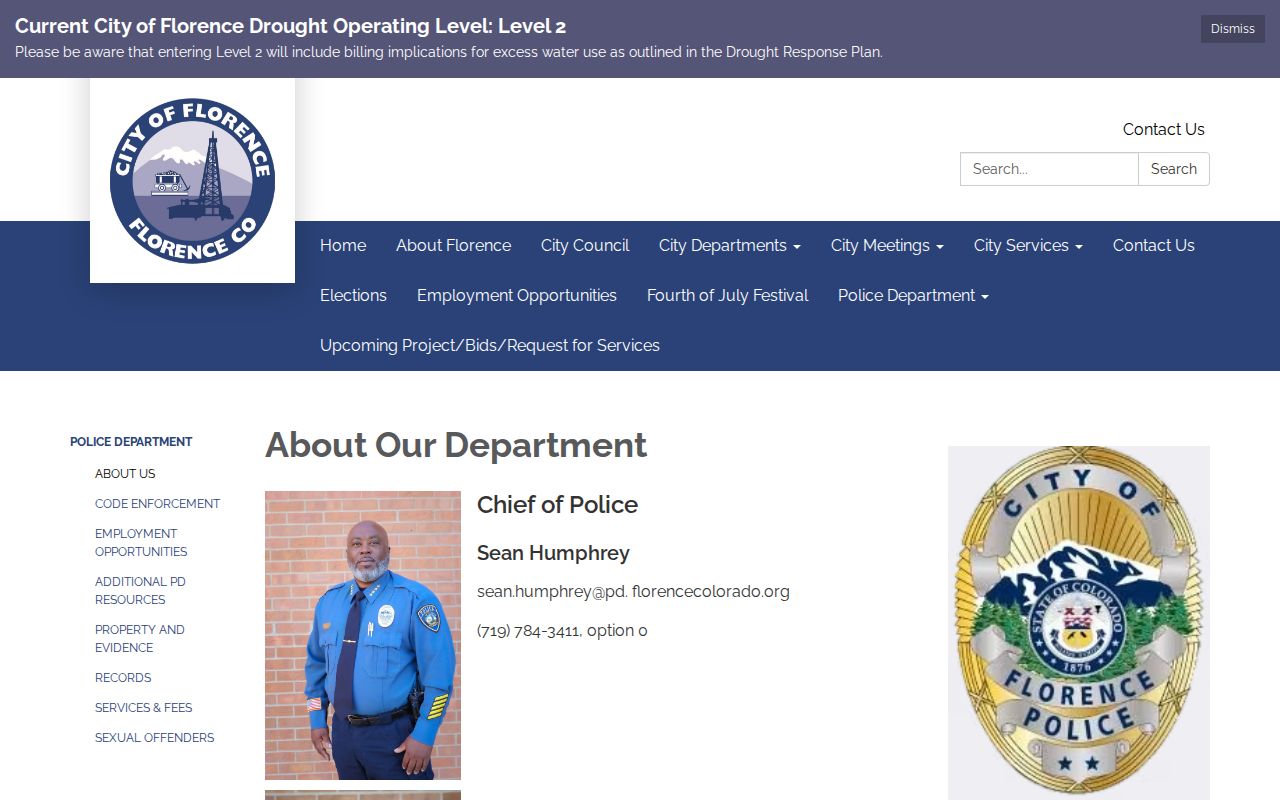
That official city agency page covers police contact, but it doesn't replace the clerk. If Florence Municipal Court issued an order, that clerk controls the case status. If County or District Court issued it, Fremont Combined Court is the public record route. FCSO Records handles non-exempt law-enforcement reports, and active or incomplete matters may be delayed, withheld, or redacted. The issuing clerk keeps the court file under judicial access rules.
Serving Arrest Warrants in Fremont County
Once signed, a valid Fremont County arrest warrant can be executed by any authorized peace officer. Service might happen during direct contact, an unrelated lawful stop, or another encounter. No office here publishes a universal service schedule or a self-surrender policy. Nobody can safely promise when, where, or how officers will act. After custody, Intake/Booking records the hold and follows the terms the court sets. The Sheriff's inmate-locator guidance sends the public to Colorado VINELink or to Intake/Booking at 719-276-5555 option 2. Bond and hold facts can change, so confirm any web result with the detention facility or the court. Civil process is a separate function. That office serves subpoenas, garnishments, writs, and other civil orders, including some service on people in correctional facilities, and it uses 719-276-5535. A civil writ or service return is not a criminal arrest warrant. Note: Shared walls at the Justice Center do not merge the court, Sheriff, police, and municipal record systems.
Small-Town Fremont County Arrest Warrant Routes
Williamsburg, Rockvale, and Coal Creek run no independent police warrant portals of their own. Their public-safety and law-enforcement links route toward FCSO, and a town clerk can help identify a municipal record custodian. That gap doesn't rule out a warrant or court process. The Williamsburg town page gives the official municipal contact setting.
Williamsburg names a municipal court and docket resources for its town matters, while its public-safety page sends law-enforcement questions straight to FCSO. That split tells you where to look. A town code case starts with the court or clerk named on the citation. A county criminal case runs through Fremont Combined Court or the Sheriff, depending on the record you need. For any small-town ticket, read the court name first. The officer's agency alone tells you nothing about where the case was filed or who can confirm a Fremont County warrant.
Comparing Arrest, Summons, and Bench Warrants
These tools demand different responses. A summons tells a person to appear and skips the arrest. A bench warrant usually follows a missed obligation in a Fremont County court. An arrest warrant comes only after probable-cause review for an alleged offense.
| Point | Arrest Warrant | Summons | Bench Warrant |
|---|---|---|---|
| Core command | Take the named person into custody | Appear at a stated place and time | Take a person into custody after a court issue |
| Common basis | Sworn probable cause | Notice of a charge or case | Failure to appear or comply |
| Key document | Affidavit and signed warrant | Ticket or written summons | Appearance history and court order |
| Public route | Issuing clerk and Sheriff | Named court | Court that set the obligation |
A search warrant is different again. In Fremont County it authorizes search and seizure rather than an ordinary arrest lookup, and its application can stay sealed while an investigation runs.
Williamsburg and Fremont County Arrest Warrants
Williamsburg keeps no town police department of its own. Its official public-safety page routes law-enforcement calls to the Fremont County Sheriff's Office at 719-276-5555 and emergencies to 911. The official routing page spells out that arrangement.
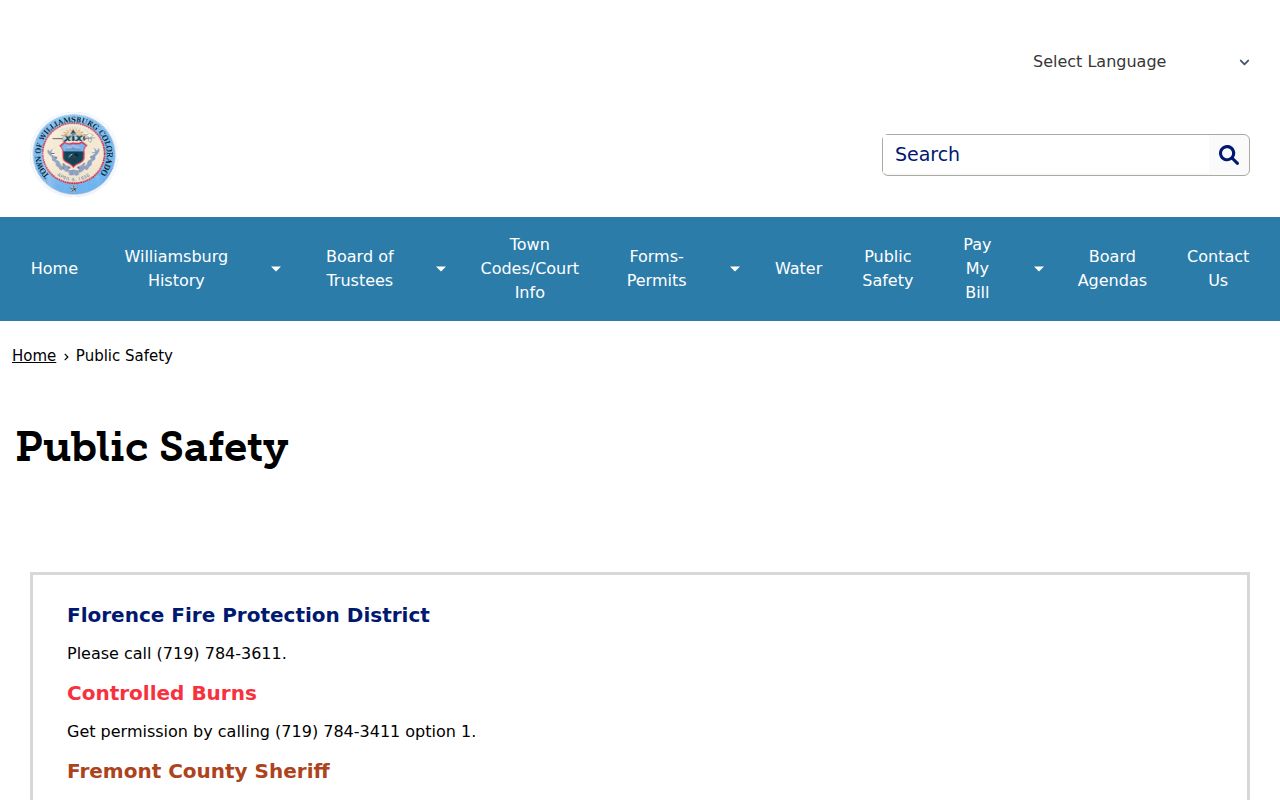
That page answers who handles public safety, not whether an arrest warrant is active. A municipal ordinance matter may still need the town court or clerk. A state case belongs with Fremont Combined Court. Call the Sheriff for law-enforcement or custody questions. Call the issuing court for legal status. When you request records, give the clerk the approximate date, agency, record type, and case number if you have it. And never push an urgent warrant or emergency through a town contact form.
Restricted Fremont County Arrest Warrant Records
Court files and Sheriff files answer to different access rules. Chief Justice Directive 05-01 governs public access to court records and gives clerks a security role, while the Colorado Criminal Justice Records Act controls many law-enforcement records. Sealing, suppression, juvenile law, protective orders, and active investigations can close either route in Fremont County. For a public complaint, disposition, register of actions, or related case record, use the court document request; it accepts case and party identifiers and warns that protected records may require identification. For a Sheriff report, use FCSO Records. The agency may ask for details, discuss fees, or explain a denial or redaction. An active investigation can keep a probable-cause affidavit from view. A sealed warrant may not show on a docket or post feed. Never treat a closed door as proof that no Fremont County arrest warrant exists.
Record rule: Ask the custodian which public document can be released and request the legal basis for any denial or redaction.
Rockvale Fremont County Arrest Warrant Custodians
Rockvale posts no municipal warrant search or recall process. Its official website sends law enforcement to FCSO and lists the town clerk's contact, and the town's official home page shows that routing for Fremont County callers.
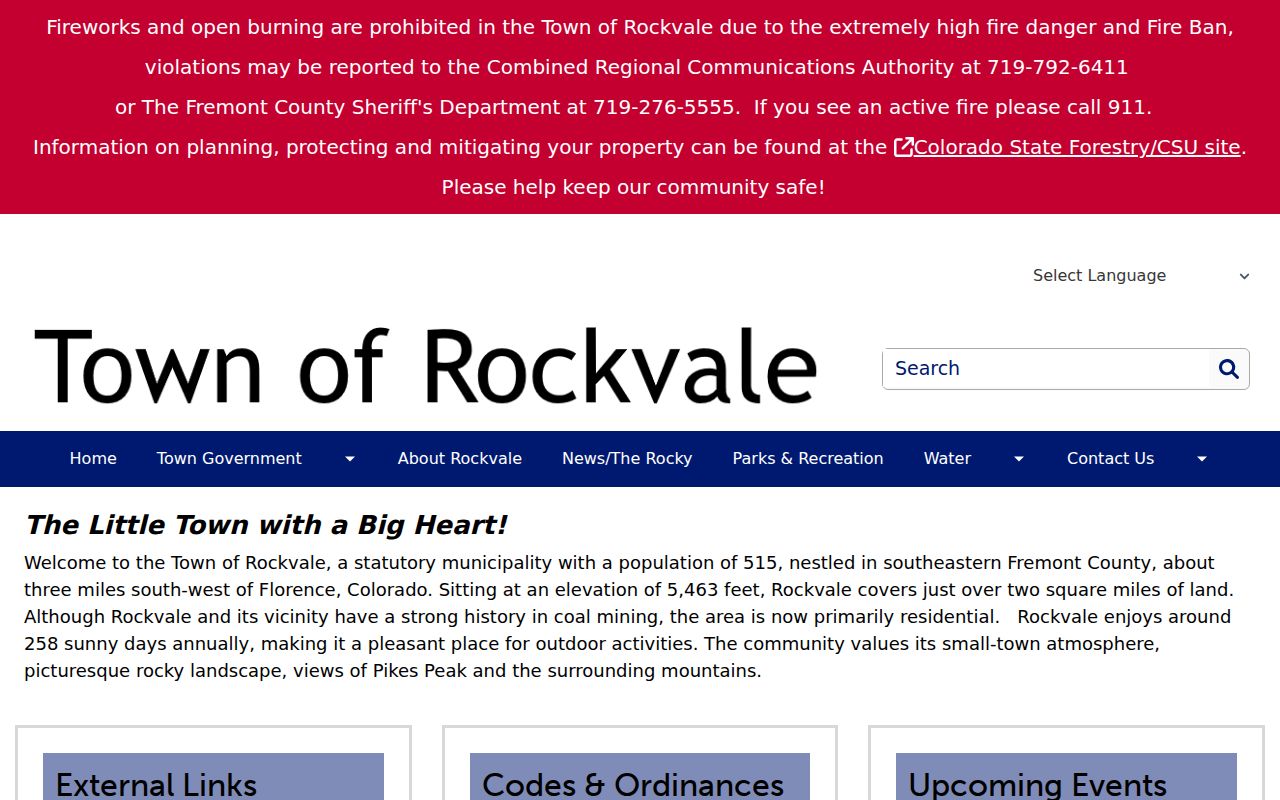
Rockvale Town Hall sits at 156 Rockafellow Street, and the clerk answers at 719-784-4125. Those facts help with municipal routing. They do not make Town Hall a warrant database. Start with the ticket or summons and ask which court holds the file. Coal Creek works the same way. Its official pages refer to Sheriff support but publish no separate police or municipal warrant portal, so when a local resource is missing, lean on the issuing document and the official clerk rather than a commercial search service.
If There's an Arrest Warrant for You
First confirm the Fremont County arrest warrant through the issuing court, the Sheriff, or a lawyer. Fremont Combined Court answers at 719-269-0100 for County or District Court matters. FCSO uses 719-276-5555. Ask whether the warrant is still active, which court issued it, whether bond is set, and what response the Fremont County office requires. A defense lawyer can contact the court and plan a voluntary appearance, bond, or a motion to recall or quash, though no page can promise a lawyer's call will stop an arrest. Do not walk into a jail on an old post. Before you travel, ask what identification, transport, booking, bond, and court-date steps apply. Bond is a release mechanism, not proof the warrant vanished. Keep copies of the bond paperwork, your next date, the receipt, and any recall or quash order. The Fremont County warrant records overview lays out the countywide resolution framework.
Important: Seek case-specific legal advice and current court instructions before arranging any appearance or surrender on a Fremont County arrest warrant.
An urgent threat or emergency belongs with 911. A warrant-status or public-record question in Fremont County belongs with the official court or agency channel.