
Checking for a Warrant in Florence
City traffic, parking, animal, code, and charter matters all belong to Florence Municipal Court. Start there. Bring the full legal name, date of birth, case or ticket number, and the scheduled date. The clerk can tell an open case apart from a warrant and say whether an appearance is required, which a police records request cannot answer.
- Read the source document and identify Florence Municipal Court or Fremont Combined Court.
- Call Municipal Court at 719-784-4848 option 1 for a city case and ask for current status.
- Use the Police Records Unit only for a police report or other law-enforcement record.
- For a county case, call Fremont Combined Court at 719-269-0100 and check the official docket.
- Ask the issuing clerk or counsel what appearance, bond, payment, and written proof are required.
Florence Monthly Court Rhythm
Florence Municipal Court usually sits on the third Wednesday of each month at 9 a.m., docket permitting. It works out of City Hall at 600 West 3rd Street. The summons controls the real date and time.
| Event | Published Timing | Best Check |
|---|---|---|
| Municipal docket | Third Wednesday, normally 9 a.m. | Read summons and call clerk |
| Payment review | Regular court day at 9 a.m. | Confirm before Monday deadline |
| County case | Separate state-court schedule | Fremont Combined Court |
A monthly calendar is not a warrant list. It only shows when the Florence court generally sits. Whether a warrant exists, or an appearance moved, is answered by the clerk and the case file.
Florence Police and Municipal Court
Florence Municipal Court handles the city's charter and ordinance cases, covering animal, code, parking, and traffic matters, and it runs through City Hall. The municipal judge issues the court's orders while the clerk keeps the record. Florence Police handle enforcement and public safety, but police staff cannot replace the clerk when you need the current status of a municipal case. The Florence Police Department keeps officers on duty around the clock, with published office hours Monday through Thursday from 8 a.m. to 4:30 p.m. The court lists Municipal Judge Larry Allen and Clerk Melanie Pfeffer; the clerk line is 719-784-4848 option 1 and melanie.pfeffer@florencecolorado.org. That official police page lays out the department's own contact details.
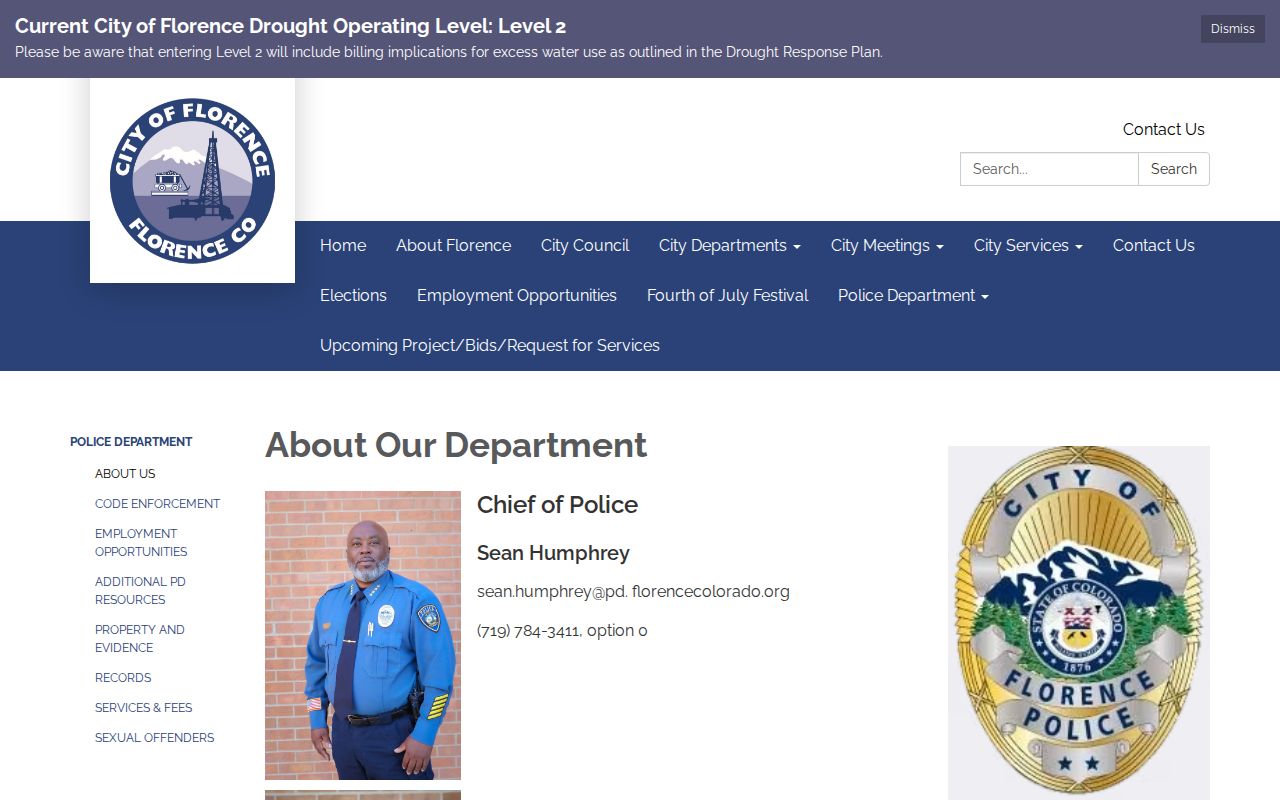
It covers contact and after-hours routing, not a public warrant search form. Emergencies go to 911. Case status questions go to the court clerk.
Florence Payment Review Deadlines
The Florence court holds payment reviews at 9 a.m. on regular court dates. If a scheduled payment is not made by the Monday before court, appear at payment review. Confirm the timing rule with the court directly.
Before the review: Ask whether payment is still accepted, whether appearance is required, whether any warrant was entered, and what record will prove the current result.
A payment review is not an amnesty. No countywide amnesty or no-arrest event exists here. A missed installment also should not be treated as an active warrant without checking the Florence case file.
Florence Warrant Types
The type follows the issuing authority and the event behind it. A bench warrant usually traces to a missed setting or a court directive. An arrest warrant rests on judicial authorization tied to an alleged offense. A search warrant authorizes a search and is often restricted while an investigation runs.
| Warrant Type | How It Arises | Who Issues It |
|---|---|---|
| Traffic warrant | Missed city traffic setting or unresolved directive | Florence Municipal Court |
| Ordinance warrant | Unresolved local code case | Florence Municipal Court |
| Bench warrant | Failure to appear or obey an order | Municipal, County, or District judge |
| Arrest warrant | Probable-cause request in a criminal matter | Authorized judge or magistrate |
What Florence Online Payment Cannot Prove
Florence posts an online payment link on its municipal court page. That access can help you finish an authorized payment. The city does not call the vendor a warrant-recall system or a full case-status database. The municipal court source shows the court's own page.
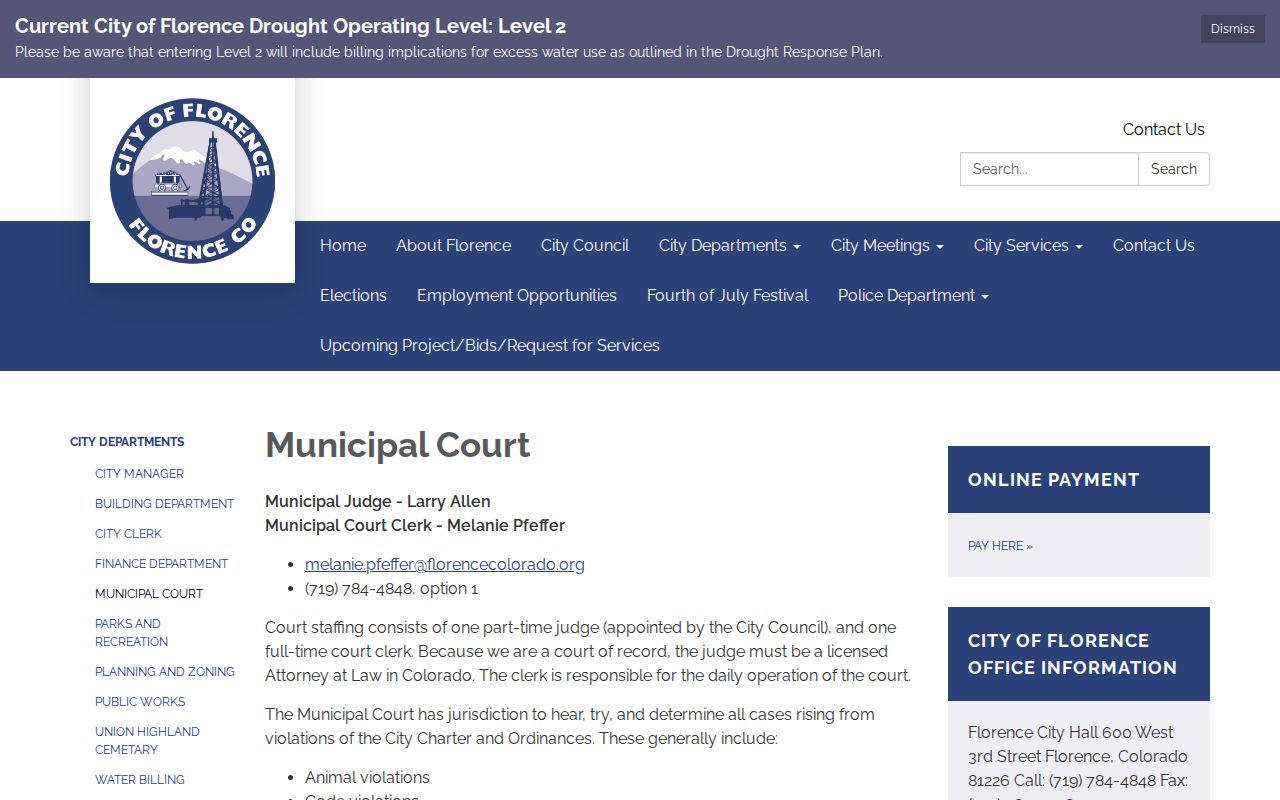
That page covers jurisdiction, the schedule, and payment-review instructions. A completed transaction does not itself prove an appearance was excused or a warrant recalled. Get the clerk's confirmation in writing and keep the receipt.
Inside a Florence Warrant Record
A public Florence file may show enough to route a question without opening the whole warrant packet. Match the court and case number first. Then compare the subject identifier, alleged violation, issue date, and current order. A public docket entry can lag or omit law-enforcement data.
| Case number | The court identifier; quote it exactly. |
|---|---|
| Subject name | Compare full name and permitted identifiers. |
| Charge or offense | An allegation, not a conviction. |
| Issuing court | The office that controls the order. |
| Bond or fine | Current amount or conditions, if public. |
| Status | Active, served, recalled, quashed, or resolved. |
Florence Summons Controls
The exact appearance date and time come from the summons, never from the city's general monthly calendar. Read the court name, case or ticket number, the alleged ordinance or traffic violation, and the command to appear. Anything unclear, call 719-784-4848 option 1.
Quick answer: A general court schedule cannot confirm a warrant. Only the current case record and clerk instruction can do that.
Keep the summons until the Florence matter is resolved. Write down the clerk's instructions, any new date, payment receipts, and any recall or quash order. Those papers beat an old web post or an unverified text.
How Florence Warrants Fit the County System
A city warrant grows out of the municipal case, while County and District Court warrants belong to Fremont Combined Court. The Sheriff may serve warrants and post selected notices. Colorado offers docket and record-request routes but no official public statewide all-warrant database.
Warrant flow: Florence Municipal Court / Police › Fremont County Sheriff › Colorado court and criminal-justice systems
When the document names County or District Court, turn to Fremont County warrant records and the county warrant lookup. A CrimeWATCH post is not a certified full register or proof of current status. Florence Police may make an arrest or create an incident record while Municipal Court keeps the city case. If someone enters county detention, FCSO may hold booking and release information. These records mark different stages, and release alone does not show that every related court order has ended.
Florence Ordinance and County Cases
Florence Municipal Court handles the city's ordinance matters: animal, code, parking, and traffic cases. Not every case belongs there. A county misdemeanor, a state traffic infraction, or a felony complaint may sit in Fremont County Court or District Court instead. The officer's agency does not decide which court owns the file.
- Municipal ordinance
- A Florence local law handled through the city court.
- Summons
- A written command to appear at the named time and court.
- Payment review
- A scheduled court review of compliance with payment terms.
- Issuing court
- The court that entered the order and controls its status.
Send ordinance questions to Florence, and send state-law questions to Fremont Combined Court.
Florence Police After-Hours Questions
Florence officers are on duty around the clock, though the published office hours are shorter. That gap matters. Once the office closes, a public-safety problem goes through the official dispatch route. A warrant question tied to a municipal summons still belongs with the court clerk during the court's contact hours. State your purpose at the start of the call. Do not treat an after-hours police contact as a municipal docket search. Never call the court for an emergency. For immediate danger, dial 911. A records copy follows the police records route, while an appearance or payment review belongs to Florence Municipal Court.
Florence Warrant Records and Public Access
Three systems sit behind any Florence warrant check. Police records, municipal court records, and state court records each follow different access rules. Say what you need: the record, the date range, the case number, and the office that holds it. Sealed files, juvenile matters, victim data, protected addresses, investigative material, and some warrant affidavits may be withheld or redacted.
Key Rules:
Colorado Open Records Act - Supplies the general public-record framework, subject to exceptions.
Colorado Criminal Justice Records Act - Governs police and sheriff records and allows lawful withholding or redaction.
Chief Justice Directive 05-01 - Sets court-record custody and remote-access limits.
Not every file is open. Sealed cases, juvenile matters, victim details, protected addresses, active investigative material, and some warrant affidavits may be withheld or redacted. A docket entry you can see does not promise the affidavit behind it. When a request is denied, ask for the legal basis and whether a redacted copy or register can be provided. Keep clerk information apart from legal advice. Florence Municipal Court staff can report the docket and explain filing steps, but they cannot choose a plea or promise that one action avoids arrest. A lawyer can review the exact summons and warrant entry. A Florence request works best when it names the municipal case, the record sought, and the relevant date, such as a register of actions, an order, a disposition, a citation record, or another specific item rather than everything. Route the request to the right office, since each holds only its own records. The municipal court answers the city case, Florence Police releases its own law-enforcement records, and Fremont Combined Court is the correct custodian when the ticket or case belongs to Colorado County or District Court. The same event can yield different lawful records through different doors in Florence.
Ask status questions plainly. Was a warrant issued? Does it remain active? What court action changed it, and is a future appearance set? If payment is authorized, confirm that payment alone satisfies the court's direction. Save the vendor receipt, the clerk email, the new court notice, and any recall or quash order. A paid screen can prove a transaction without proving that a judge withdrew the warrant. No Florence office runs a blanket amnesty, an automatic recall event, or a public self-surrender procedure, so the court's ordinary monthly process is not amnesty. When the clerk requires an appearance, bond, or consultation with counsel, follow that case-specific instruction. Check again afterward so an old post, old calendar, or unverified message does not become the final word in Florence.